Parque Huanchaca
Combeau Muratgh
Cliente
Parque Huanchaca
Location
Chile
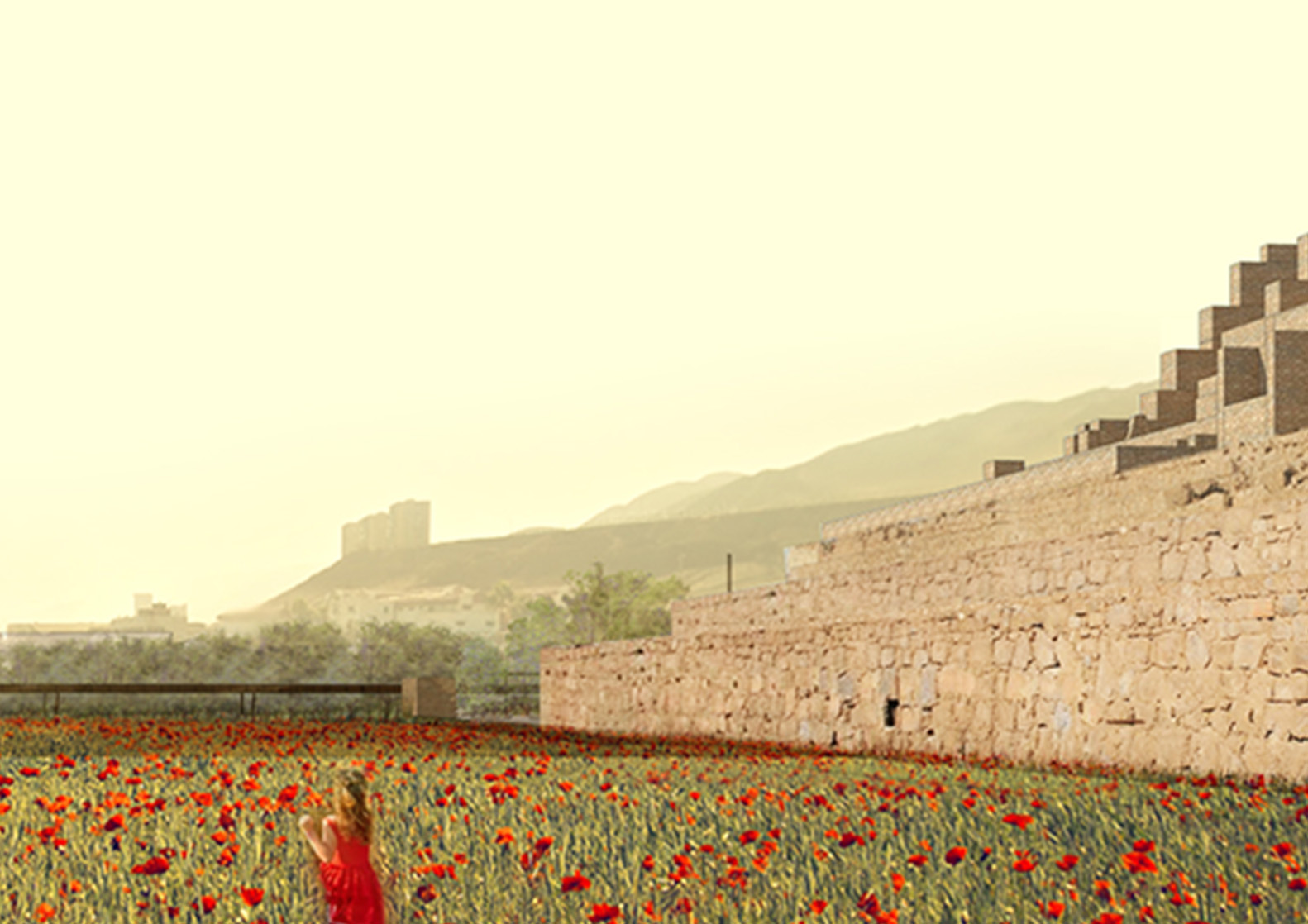
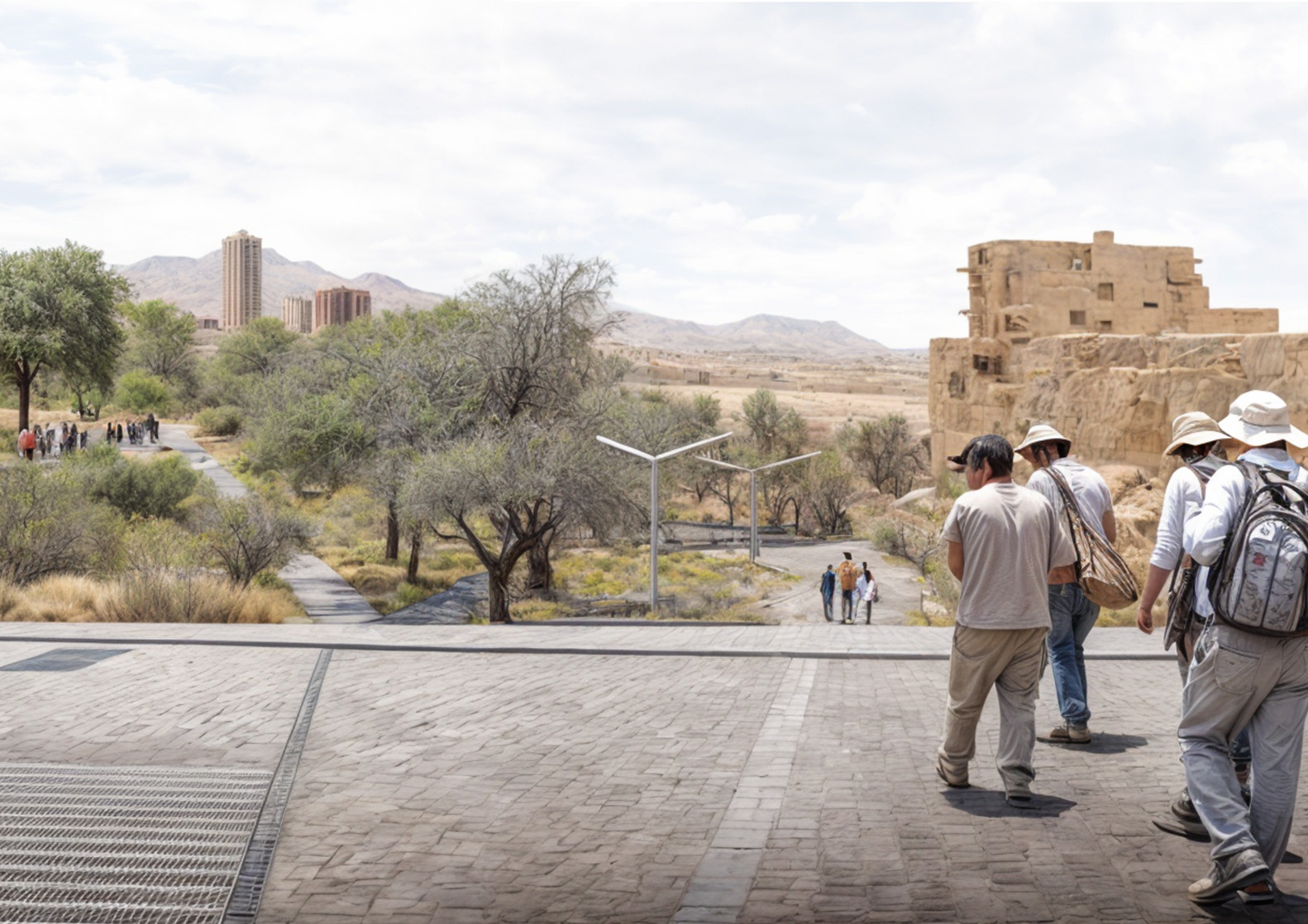
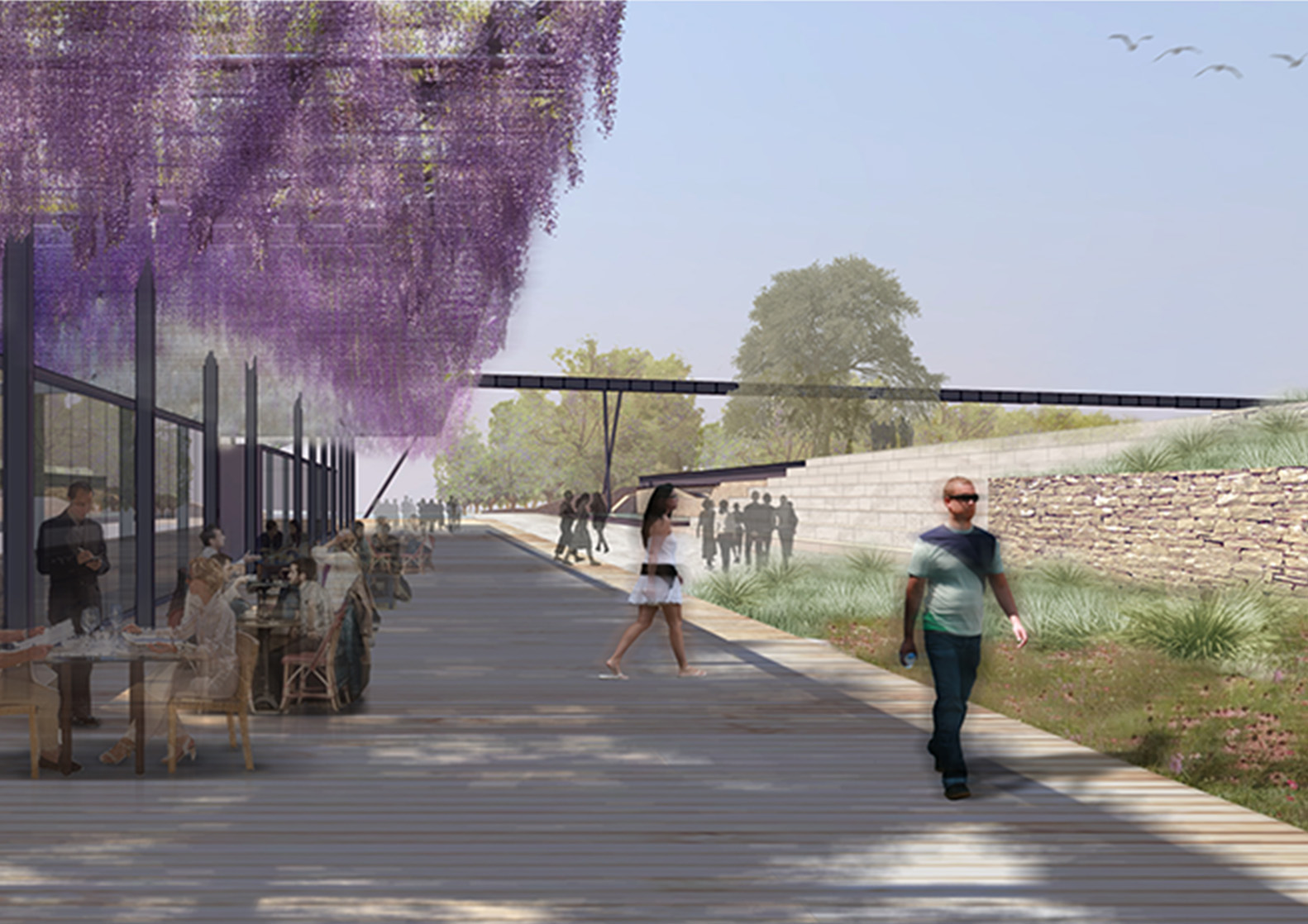
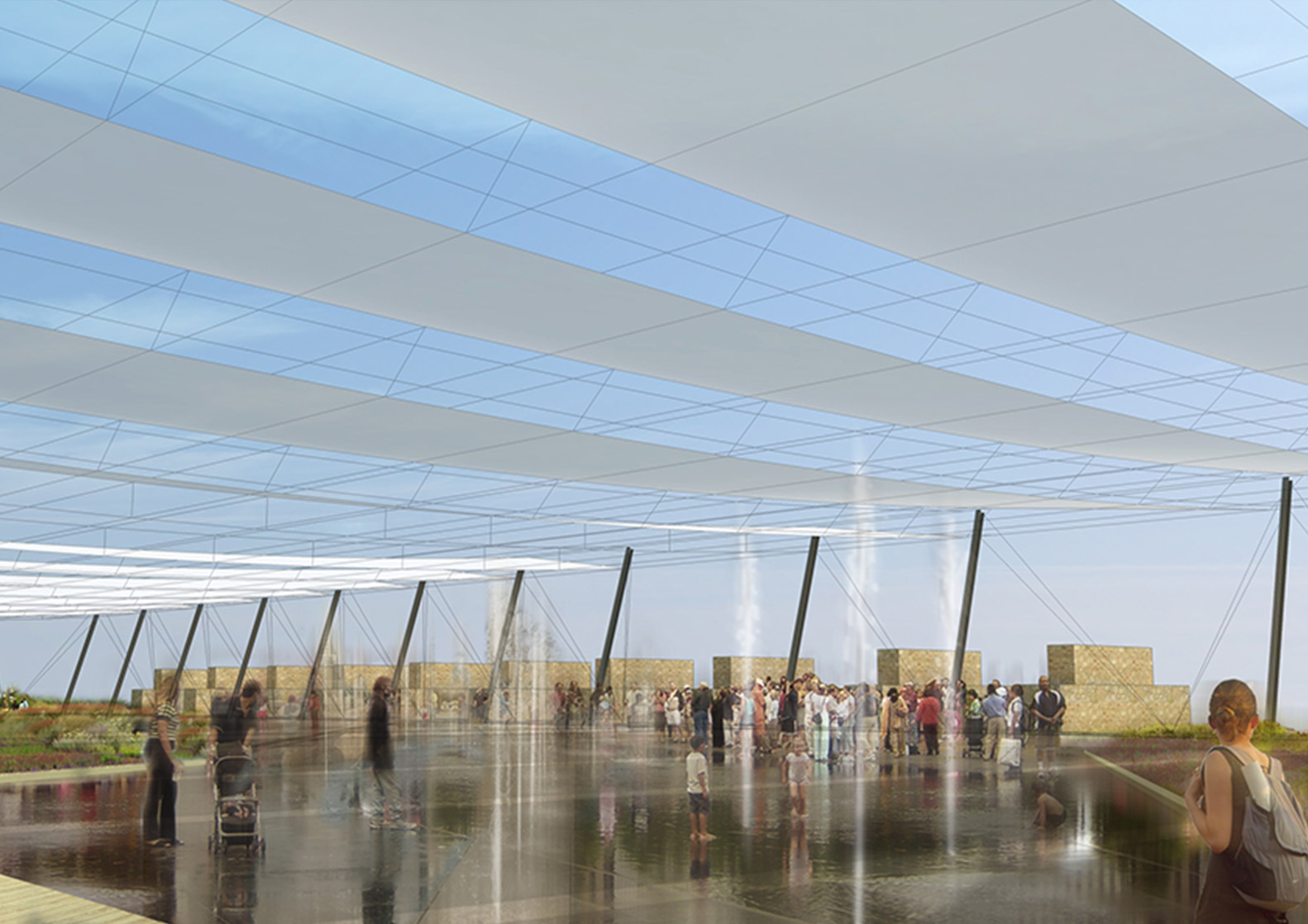
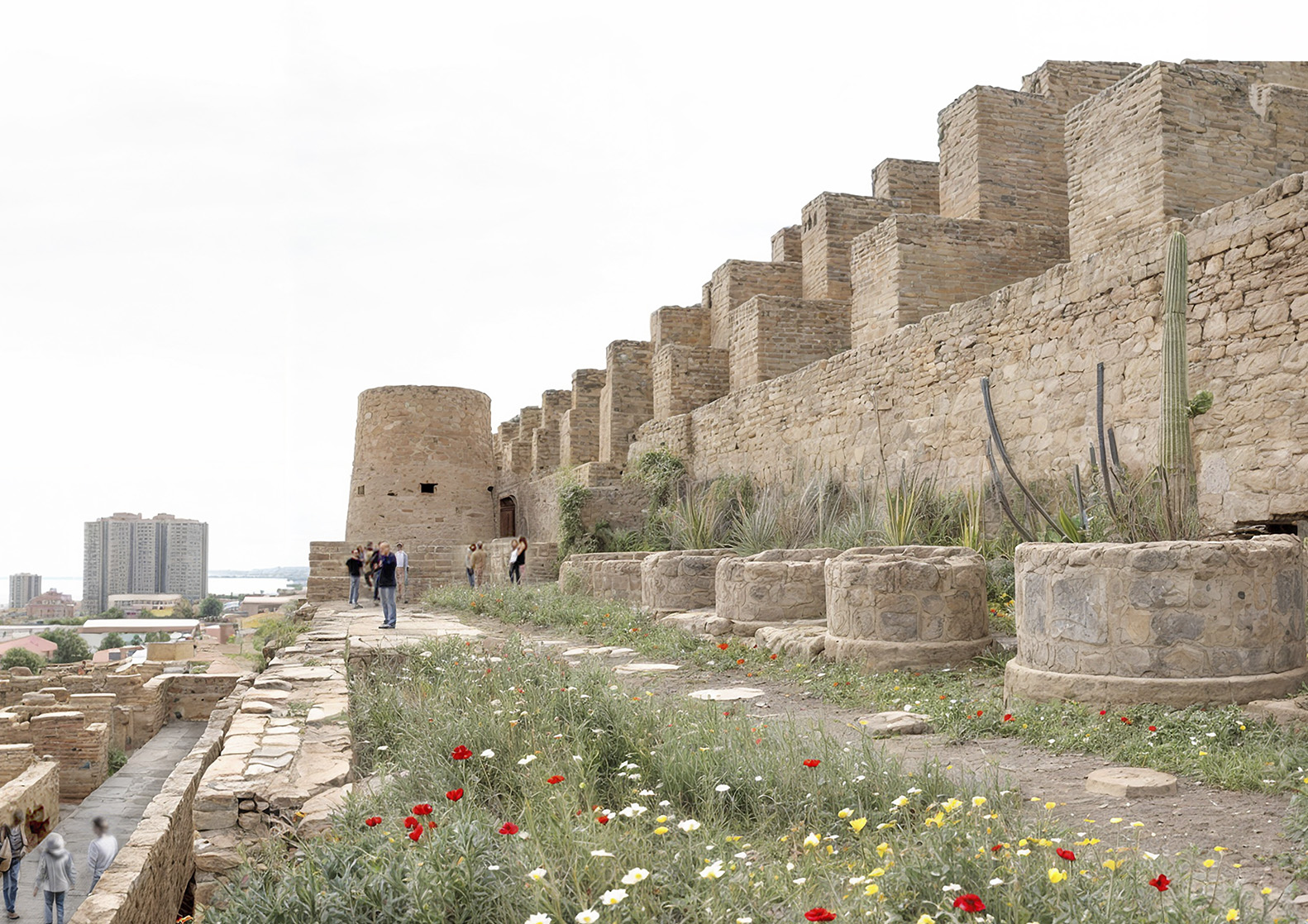
The project for Huanchaca Park consists in a design that can be a replicable strategy to other cities located in the arid north coast of Chile. Most of those cities present a serious lack of green areas, high levels of UV radiation and very low rates of rainfall. Currently in Antofagasta live more than 550.000 people and the city has the worst rate of green area per inhabitant in the country (1.3 m2).
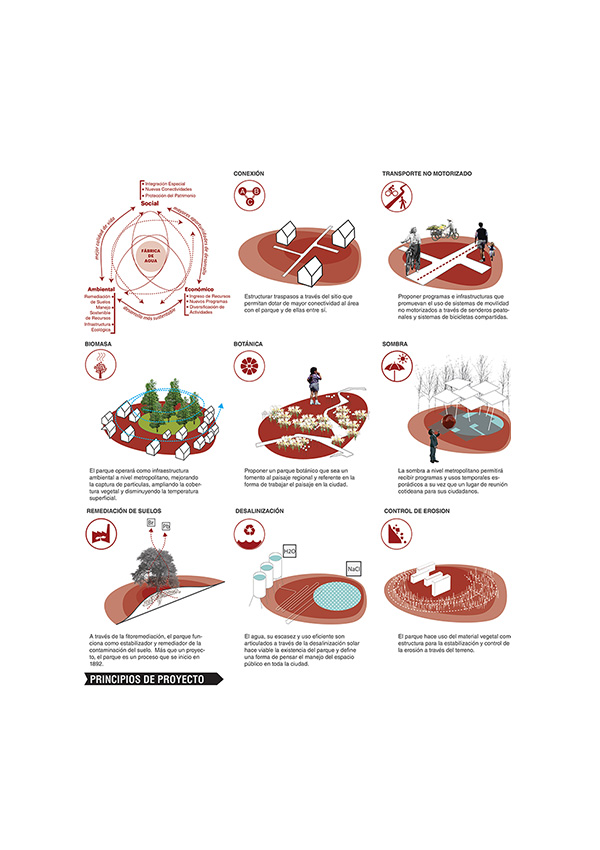
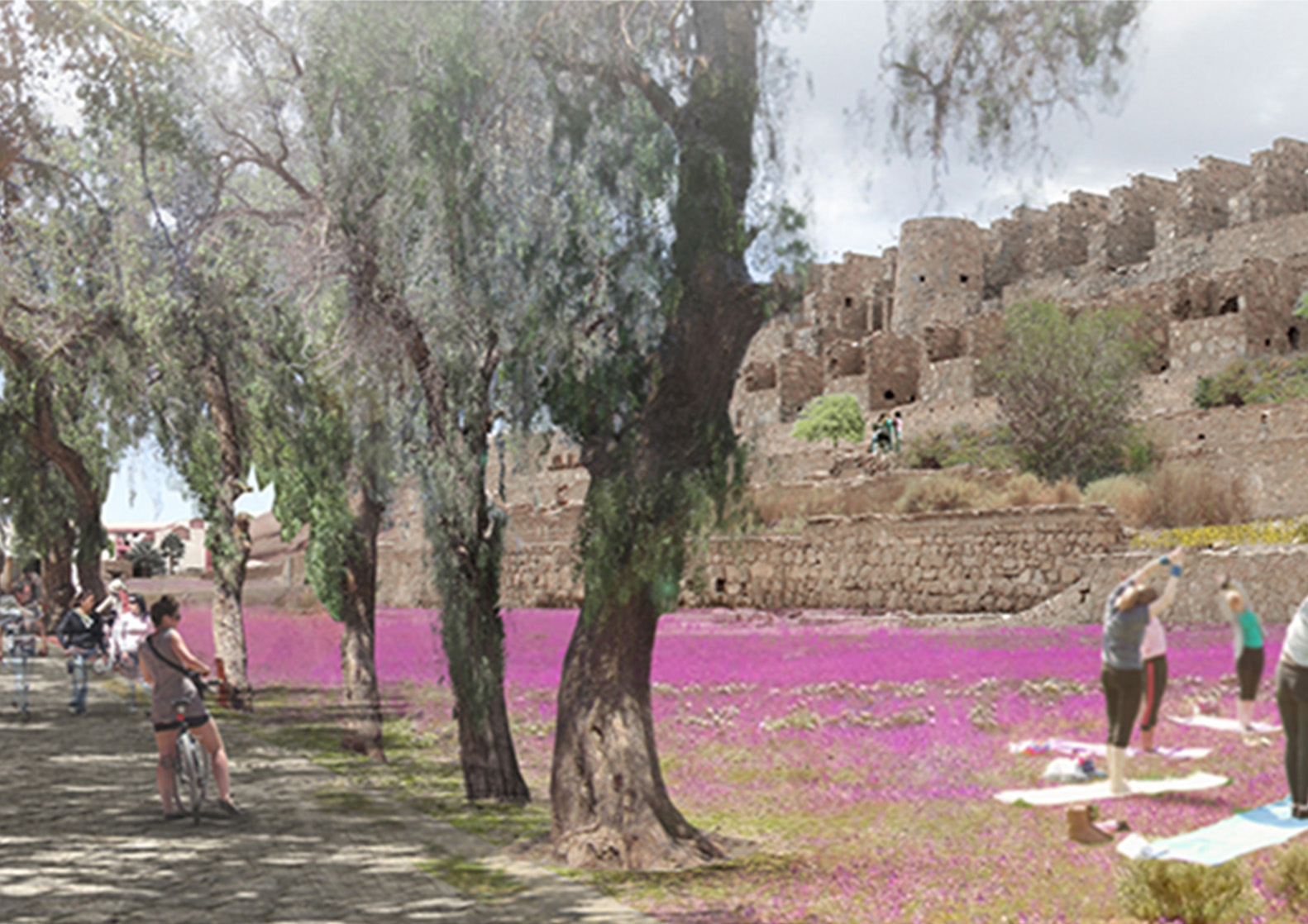
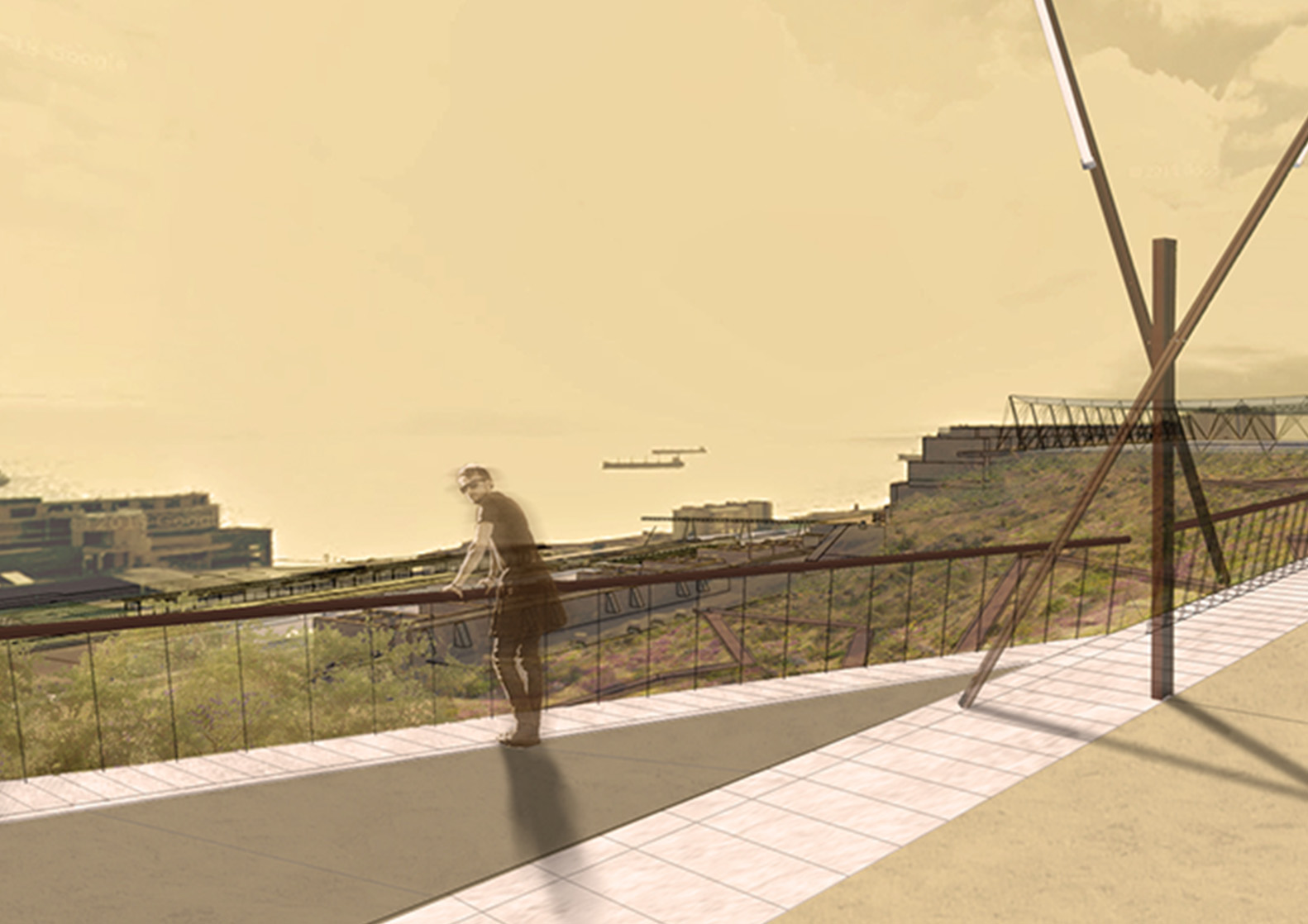
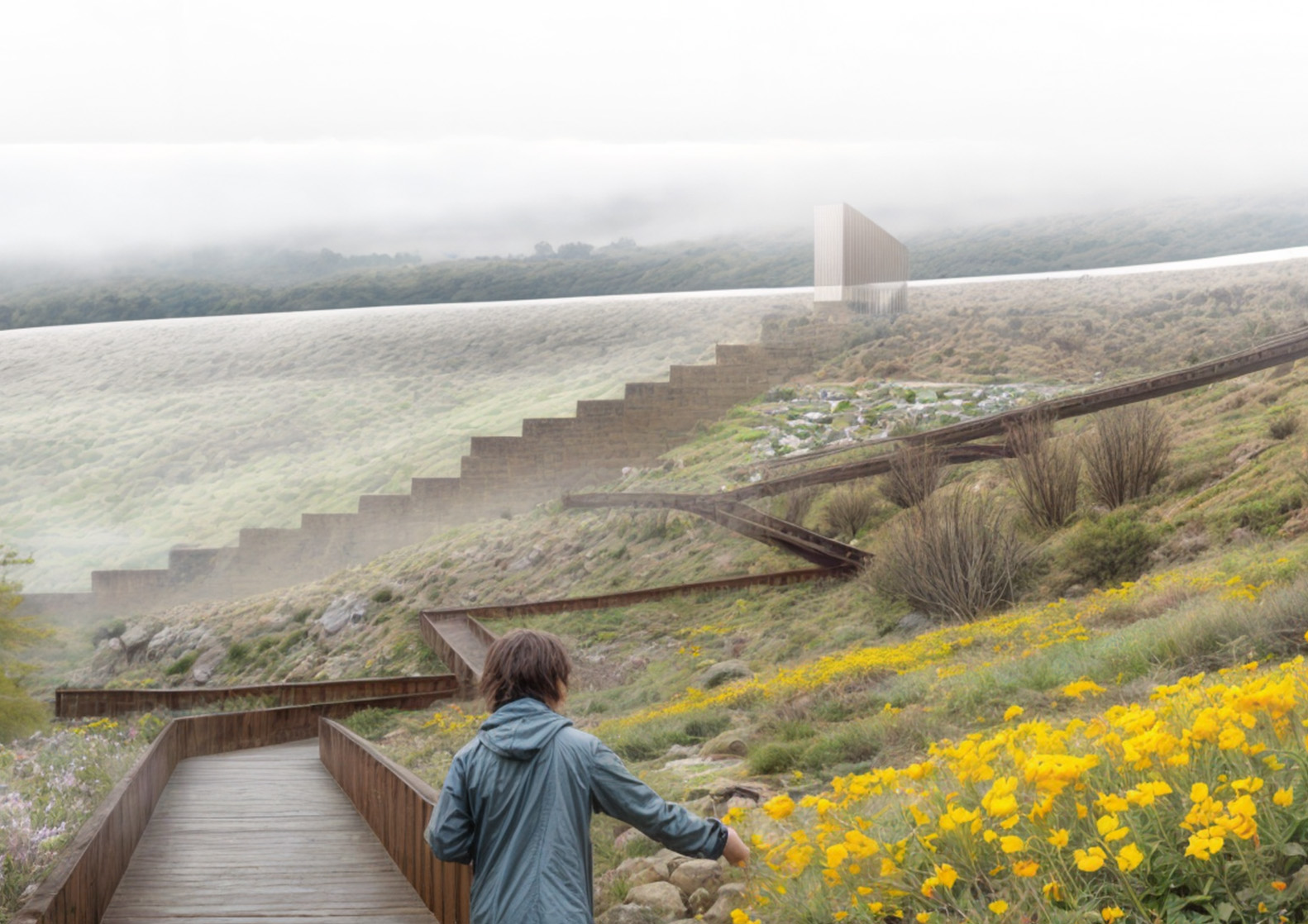
The project establishes minimal interventions to the ruins of the foundry and mainly operates in a peripheral way to it. Thus the project configures a contour that enhances the difference between the archaeological site and the multiple landscape operations. 1. Before design is necessary to create the conditions for the existence for a park in the middle of the desert. Firstly, the project consists in a solar seawater distillation plant that provides fresh water to the future biomass. The solar distillation plant sets a new reading of the industrial site, where the production process has a landscape purpose rather than metallurgical one. In addition, the production of fresh water takes as precedent, the first solar distillation plant built in 1893 by the Swedish engineer Charles Wilson, located 120 km east from Antofagasta. 64 distillers built with wood and glass occupied a 4800 m2 surface and was able to produce 20,000 liters of fresh water in a day. Thus, and based on this experience, the project can enhance the water rates of the site from 1.7mm/year to 121mm/year. 2. Secondly, the project established a large planting strategy similar to a forestry operation. The proposal takes reference from another successful experiment conducted by the Government of Chile in 1960 with the plantation of 100,000 hectares of Tamarugos trees (prosopis tamarugo) in the middle of the desert. This species reaches 18 m in height and successfully adapts to places with lack of water and high levels of radiation. By planting 6000 Tamarugos in a grid of 6x6m we will be able to: provide shadow, decrease the soil temperature, generate soil phytoremediation, control slope erosion and finally provide biomass for the city. 3. Once the first structural steps are established then the Huanchaca site can become a "park" and absorb the urban life. The new walkways will strength the integration of the neighborhood and particularly increase the relationship with the waterfront. With a second plantation of a variety of desert species the park will be transformed into a singular example of a botanical park. PRES CONSTITUCIONSustainable post-tsunami reconstruction master plan, Constitution, Chile. The plan for Sustainable Reconstruction (PRES) of Constitution was developed after the 8.8 earthquake/tsunami of February 27th, 2010. We were given 90 days to produce all necessary studies and documents capable of coordinating the action of both public and private entities in the reconstruction of infrastructure, public spaces and services, housing, energy and economic activities of the city. The 8.8 Earthquake Chile-sustainable reconstruction master plan was done with intense participation of the entire community. Chile did well against the earthquake: building codes are appropriate and respected by the people. But the challenge was that our cities proved not to be prepared against tsunamis. There were three factors that different stakeholders wanted to implement for the reconstruction: 1) Forbid settlements in the areas devastated by the waves, which was unrealistic since informal occupation would have been very hard to prevent. 2) “Do nothing”, allowing people to go back where they were, as they were, which would have been irresponsible. 3) Build massive infrastructure to protect the city, for which there was enough evidence that proved it would be useless because a tsunami is not just a heavy swell. We offered a fourth path, which was threefold: 1) No longer try to resist waves, but dissipate their energy trough friction. Against geographical threads, geographical answers: we proposed a forest able to mitigate the impact of the tsunami. If the trees had the right density, diameter and resistance to horizontal loads, we might reduce the wave´s energy by 40%. (Empirical proof, was the island in front of the city that not only reduced the force of the waves but also served as a vertical escape route, that saved many). 2) We recommended conditioned construction right after the mitigation forest with no residence and pier-like structures in the lower floor. 3) Finally and efficient evacuation plan to higher areas was designed. The combination of these three strategies allowed for a reconstruction of the city as close as possible to where it has historically been, in proximity to the sea and the river that actually are the base of its existence. But a tragedy is always an opportunity too: the park opened the city towards the river, providing democratic public access to what the community identified as their real identity (previously owned only by a few private landlords), repairing the historical debt of green areas. With this new anti-tsunami urban DNA plus and updated urban standard for the hole city, each of the buildings, streets, squares and houses (following the Elemental principles that we have developed over the years on incremental housing) to be reconstructed could be developed on substantiated physical and conceptual urban foundations. Novartis
Alejandro Aravena was commissioned in 2010 to design an eight-story building for the new Novartis research center in Shanghai. Located on a private campus with other 11 buildings similar in size, the C-4 building rises as an archaic and petrous block, where innovation and sustainability are unexpectedly embedded in the DNA of the design.
Normally offices buildings want to look “contemporary” by having glass facades, but due to the local weather in Shanghai, the pay-off is a huge green house effect and inappropriate lighting conditions for work with computers. This building had to respond to the client’s expectation of having a “state of the art” building with a “contemporary look” by taking a critical position towards offices buildings.
SUSTAINABILITY
In Shanghai, glass office buildings has huge amount of energy spent in air conditioning. The way to avoid undesired heat gains and impractical overexposure to sunlight, is to place the mass of the building on the perimeter, have recessed glasses to prevent direct sun radiation and allow for cross ventilation. The response to the context was nothing but the rigorous use of common sense.
The biggest threat to an innovation center is obsolescence; functional and stylistic obsolescence. The rejection of the glass façade building was the result of searching for a design that could stand the test of time. We thought the best way to fight obsolescence was to think the building as if it was an infrastructure more than “architecture”. A clear, direct and even rough form is in the end the most flexible way to allow for continuous change and renewal. A rather strict geometry and strong monolithic materiality is how we thought to replace trendiness by timelessness. The facades exposed to direct sun are built with cracked handcraft bricks. Thus, with the using of a common and traditional construction material, the building can express vitality through roughness and imperfection.
WORKING SPACE
Working landscape, interaction, transparency, formal, informal, individual, group, meeting.
Knowledge creation requires face-to-face interaction among people and to be able to witness what others are working on. The open plan
In conventional buildings, meeting places tend to be only on the ground floor and while going to each level, people normally misses what is going on in other floors. So, we multiplied the meeting spaces throughout the whole height of the building using the triple height recessed windows as elevated squares. By introducing a permeable atrium at the core of the volume we also took the opportunity to use vertical circulation as a chance to learn what is going on inside.