
-
Emporio Liguai

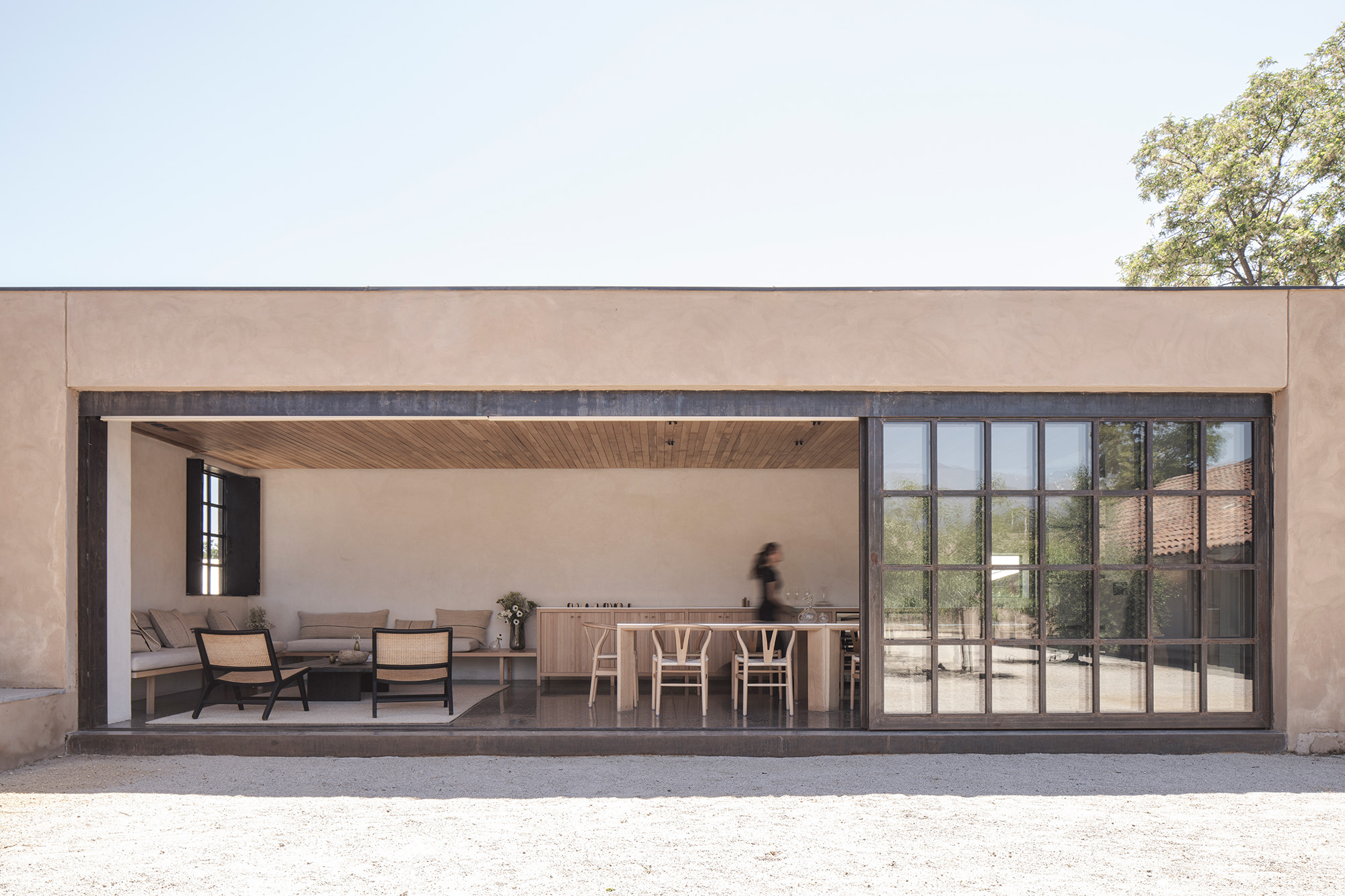
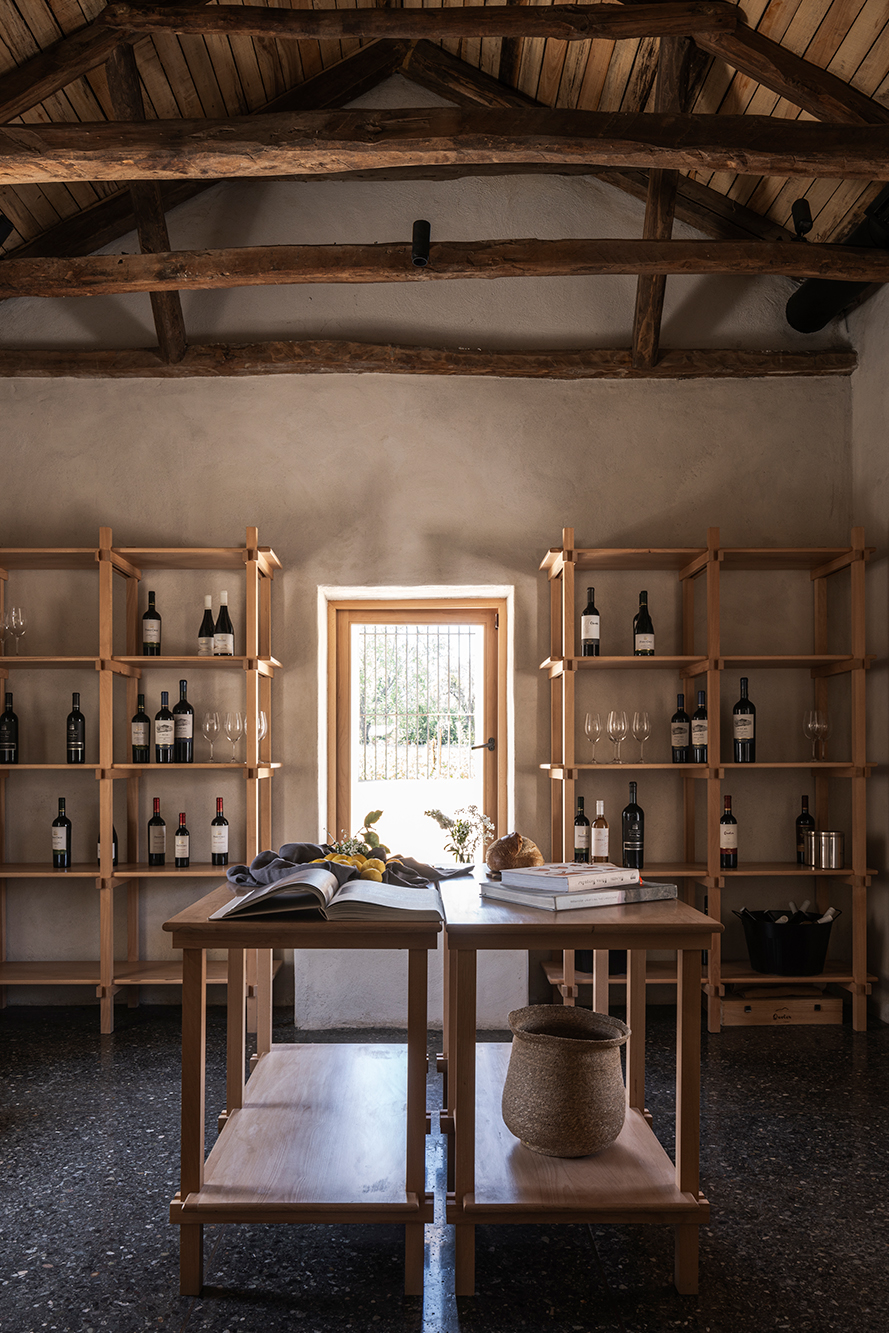
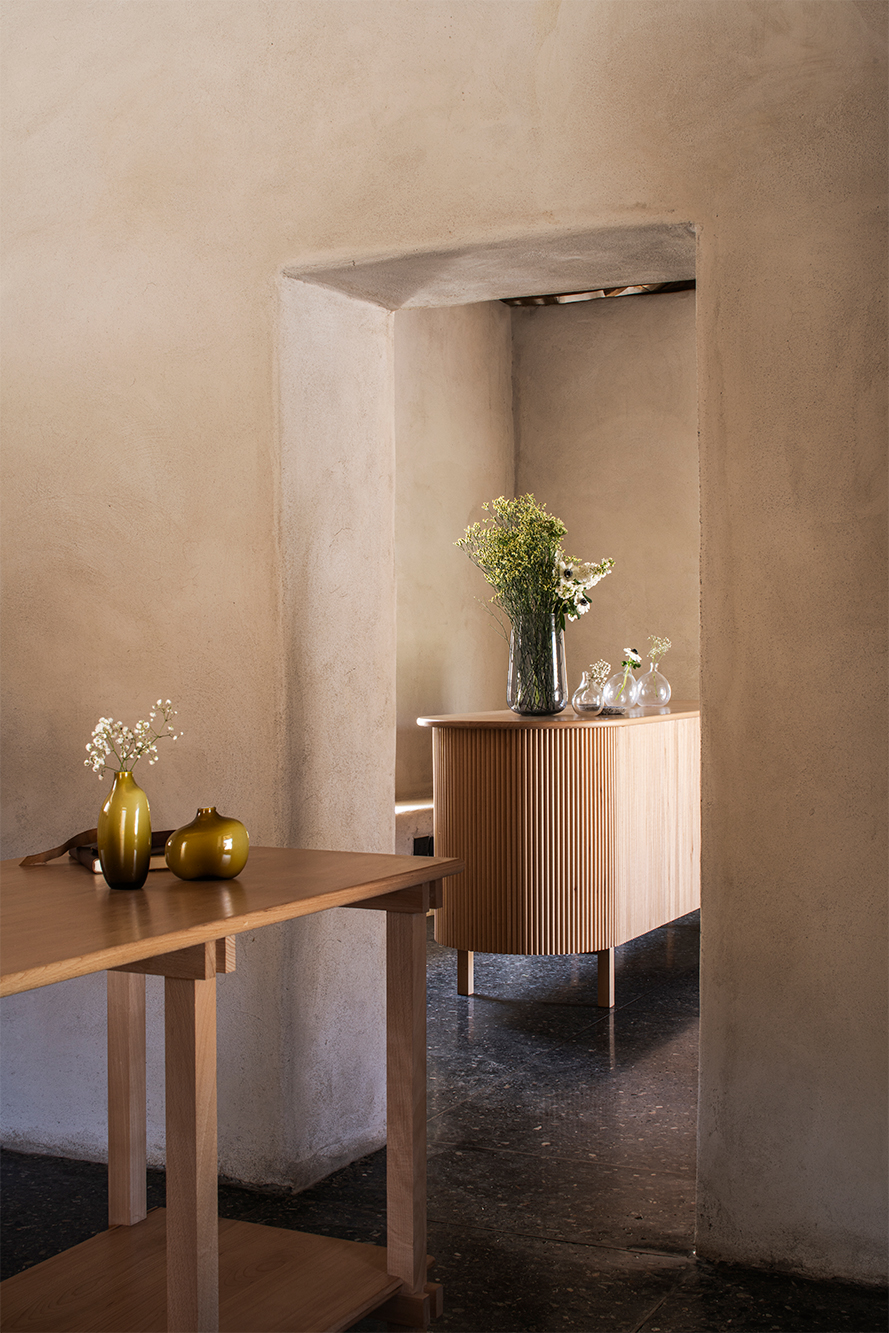
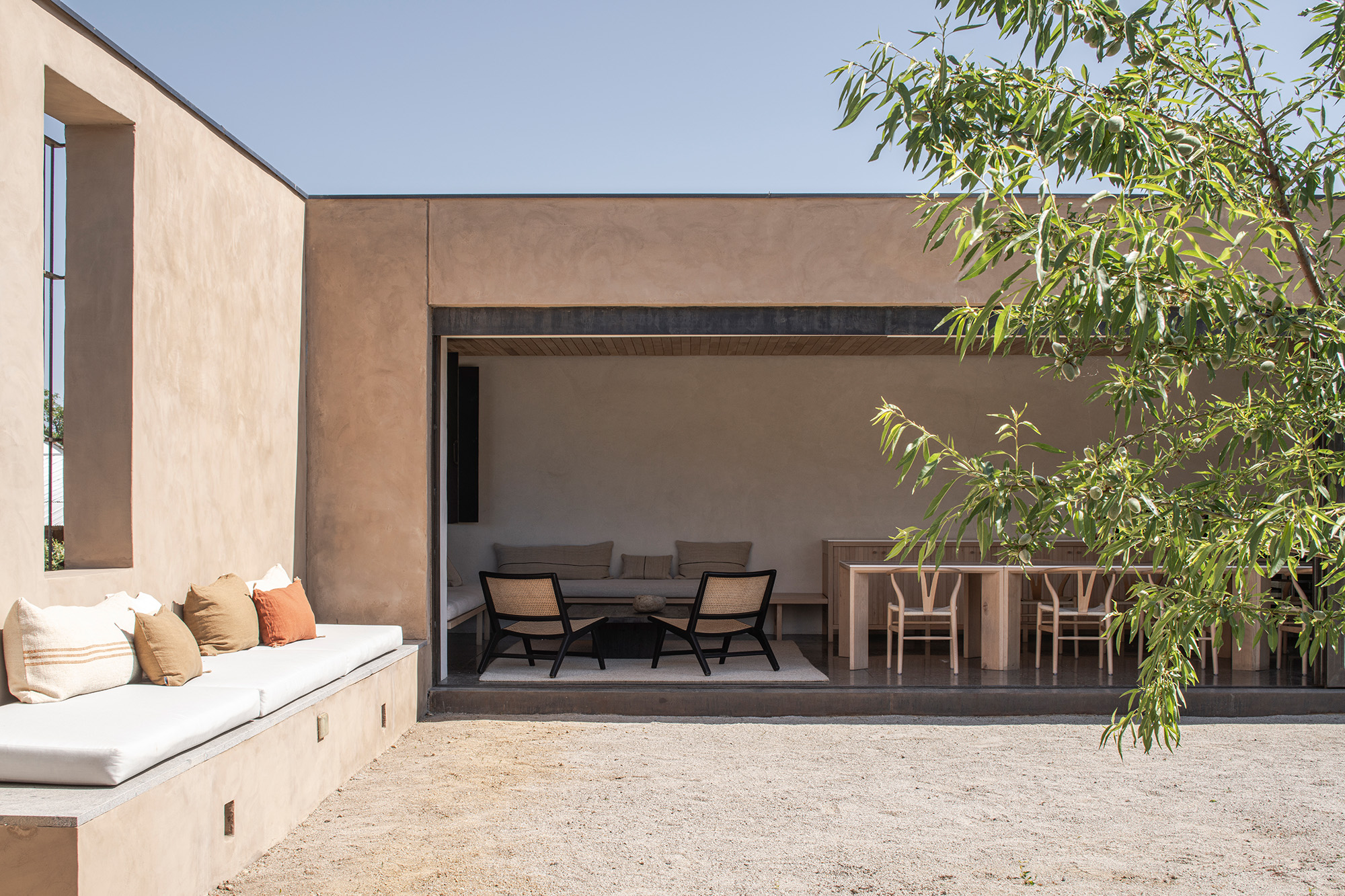
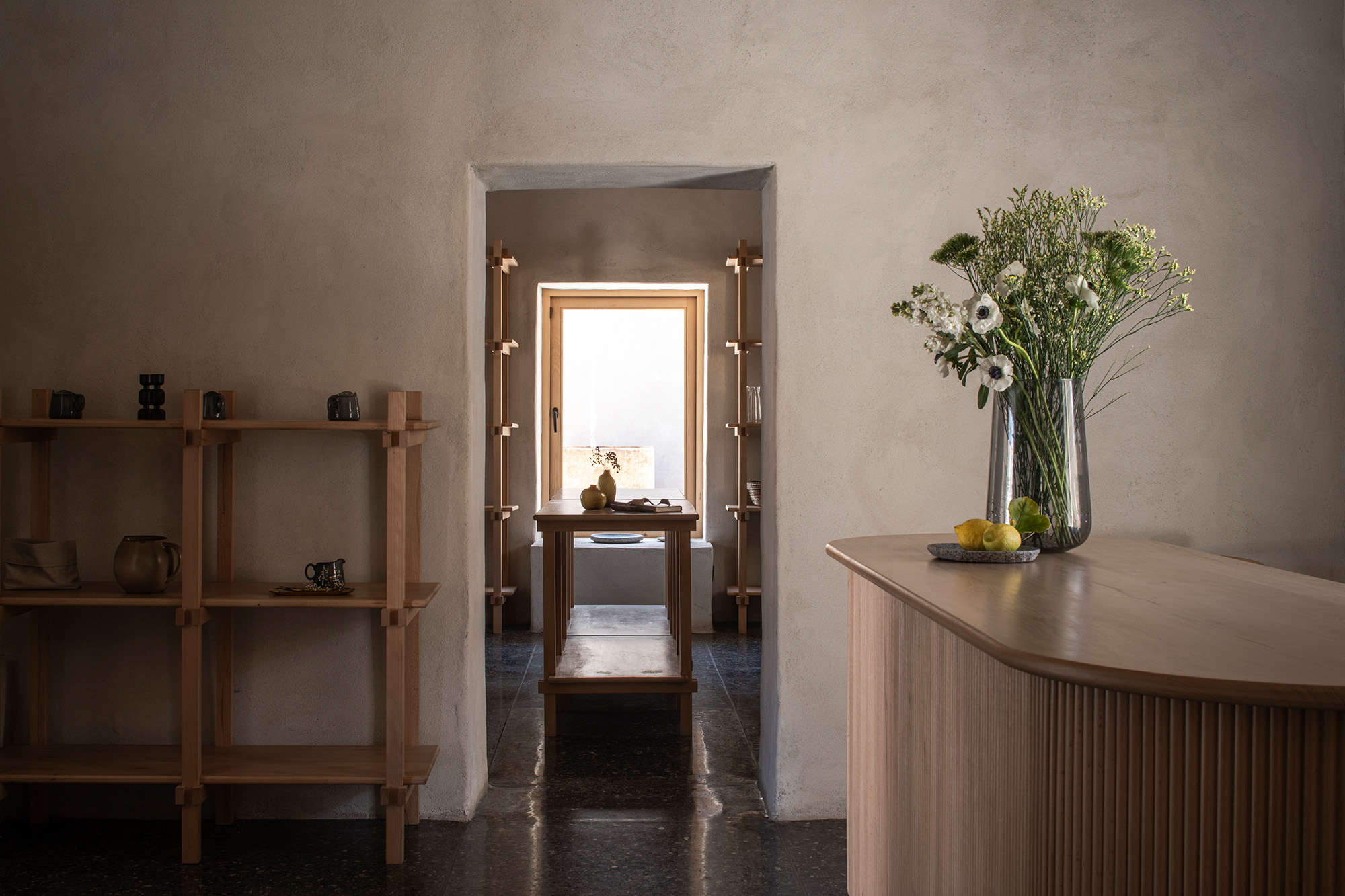
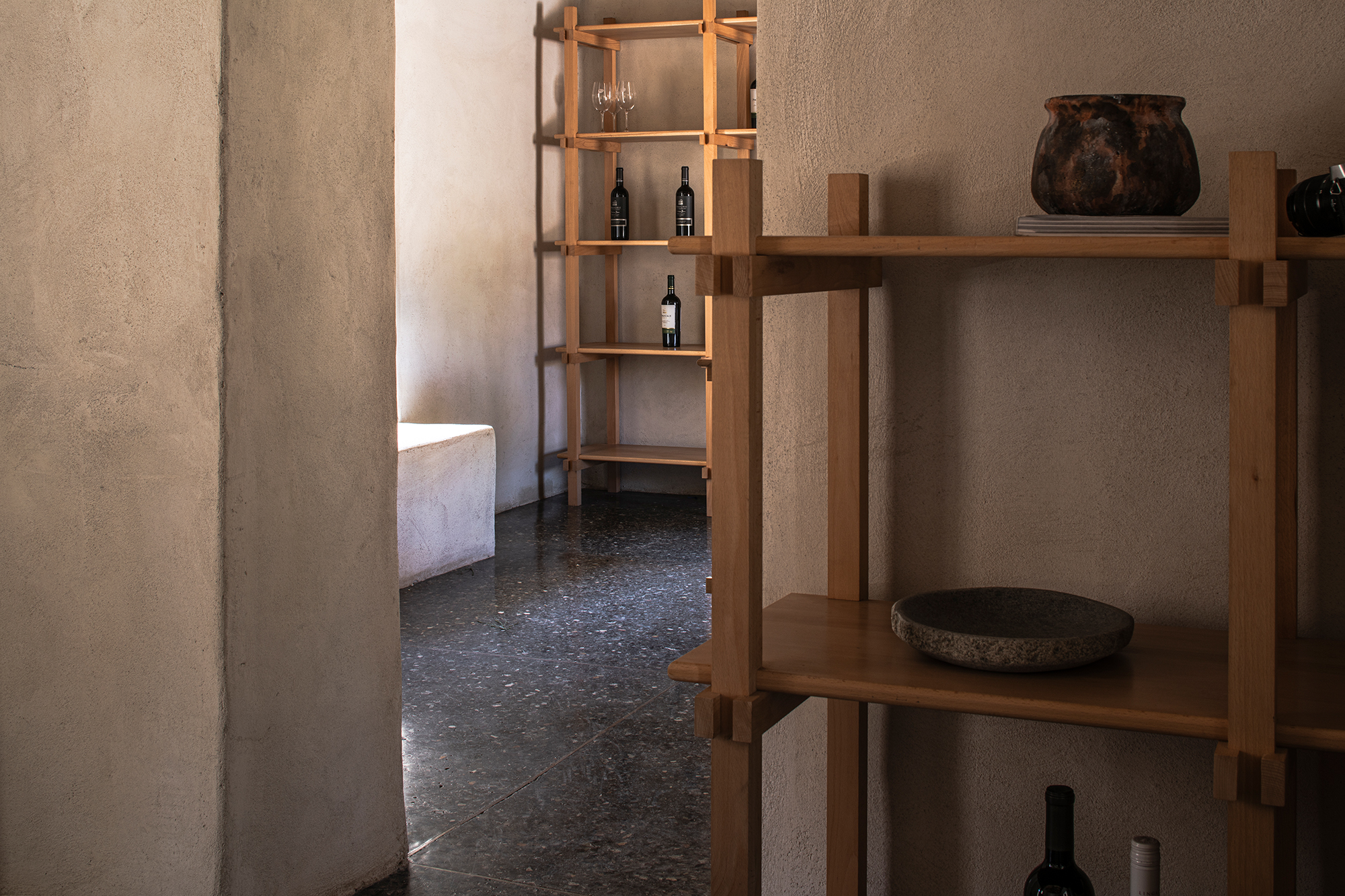
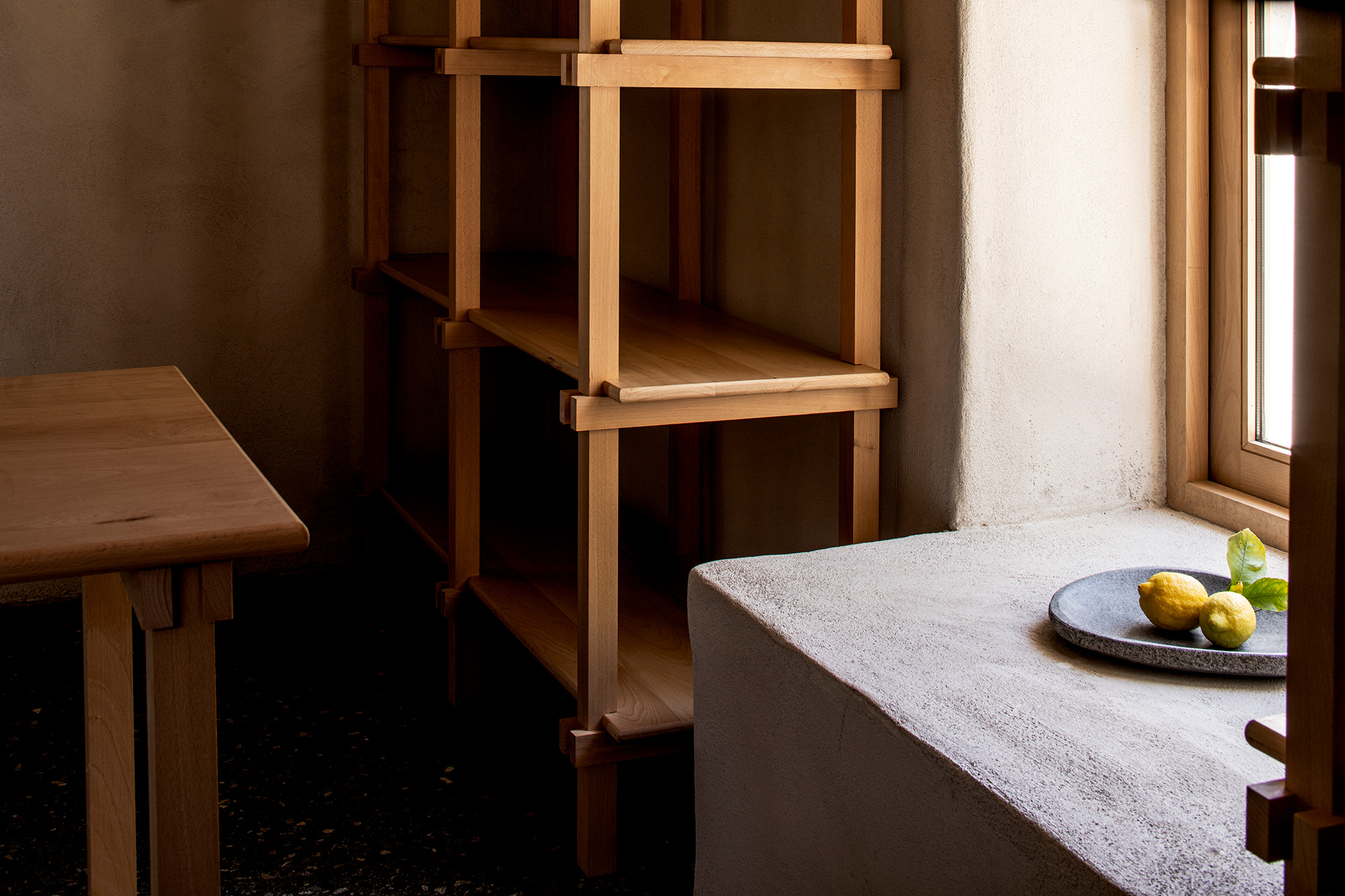
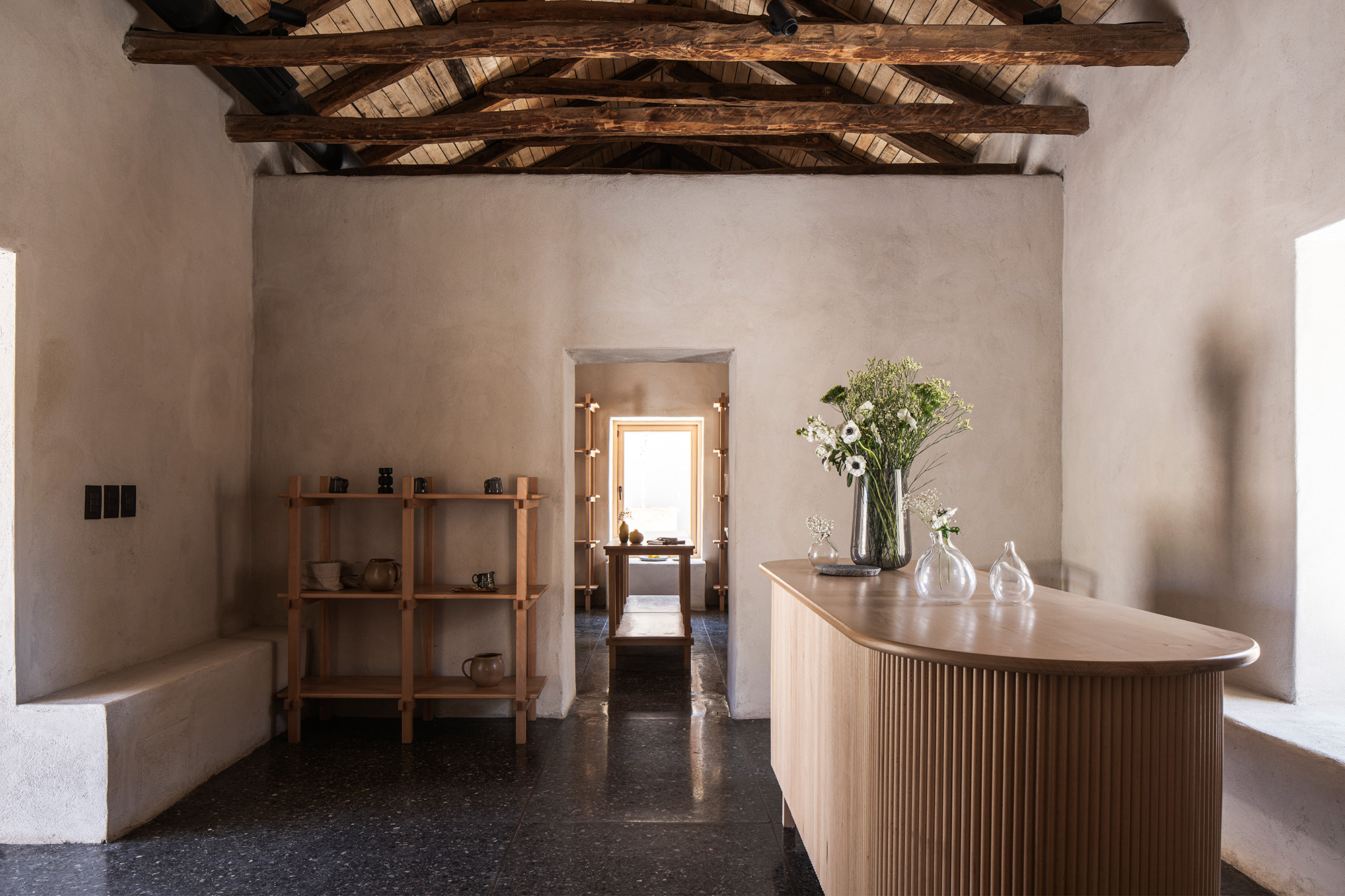
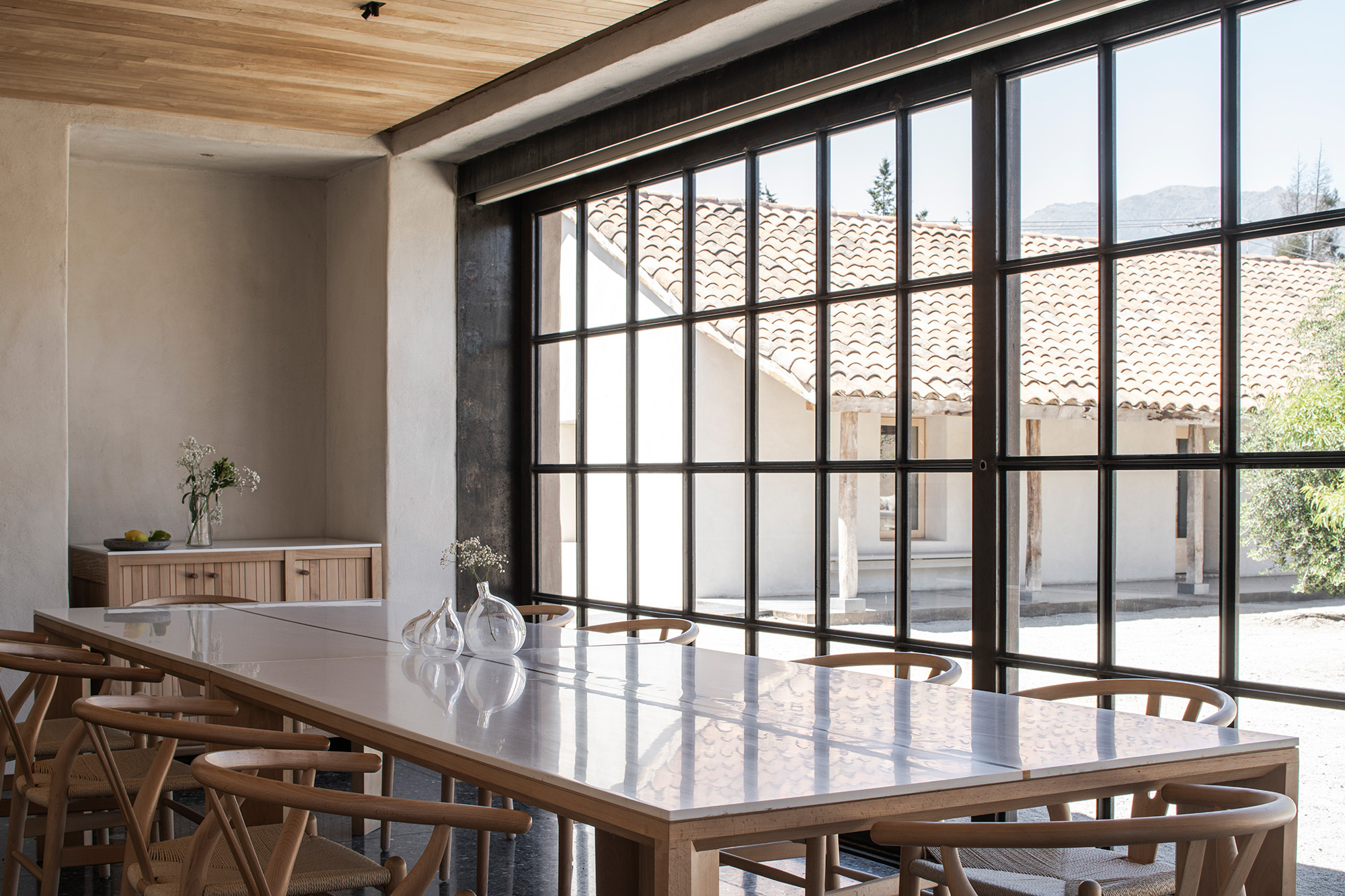
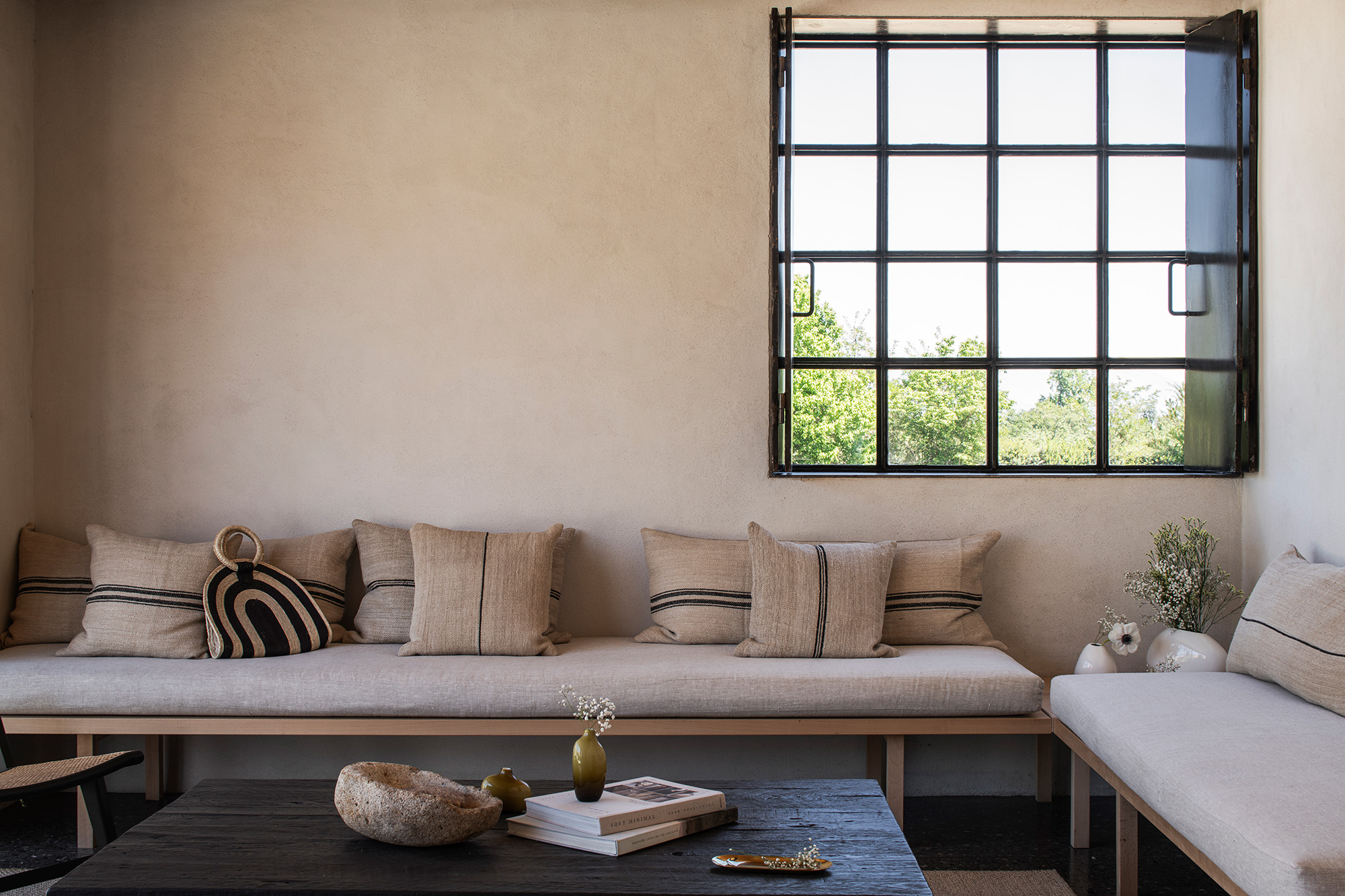
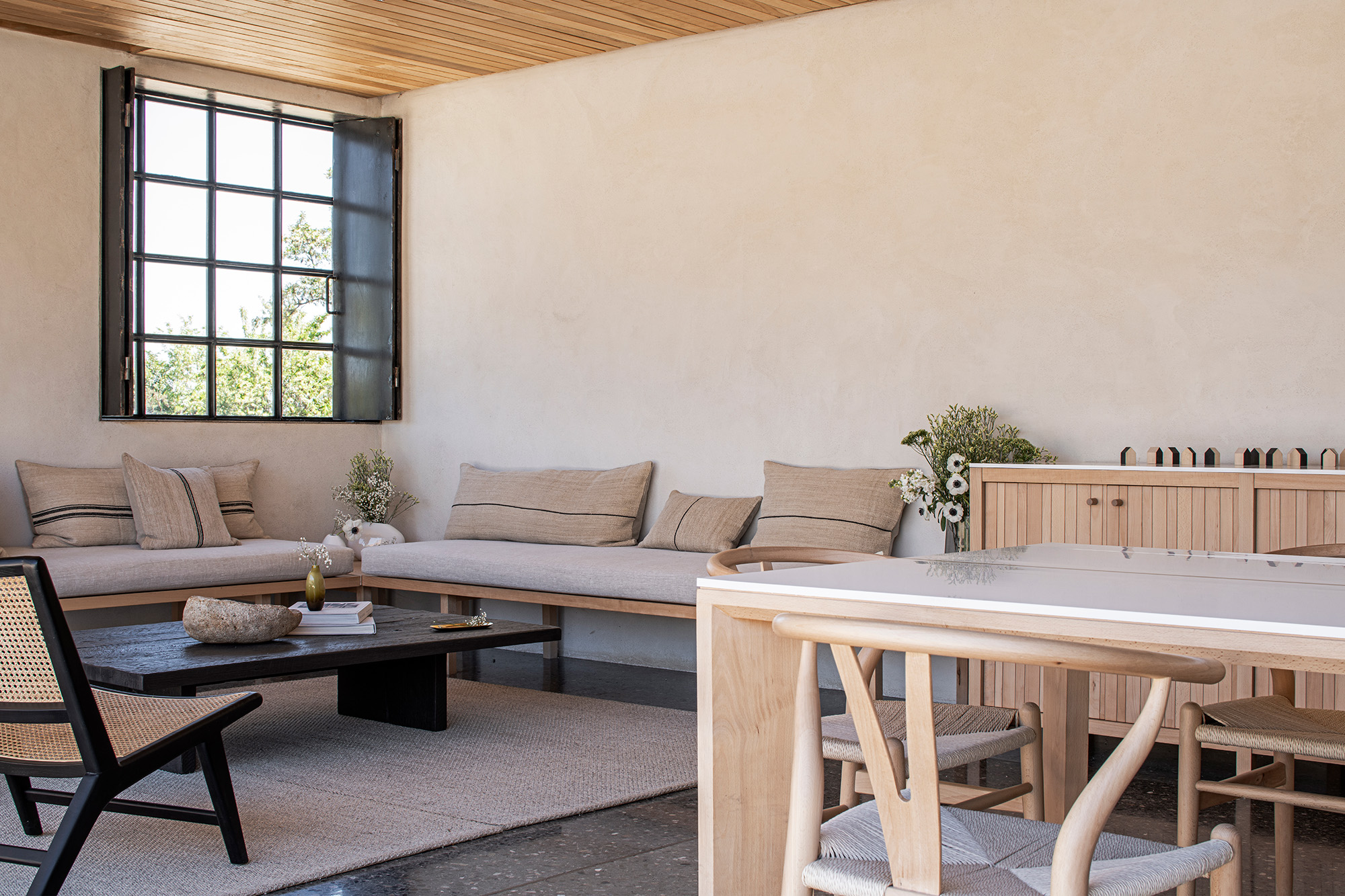
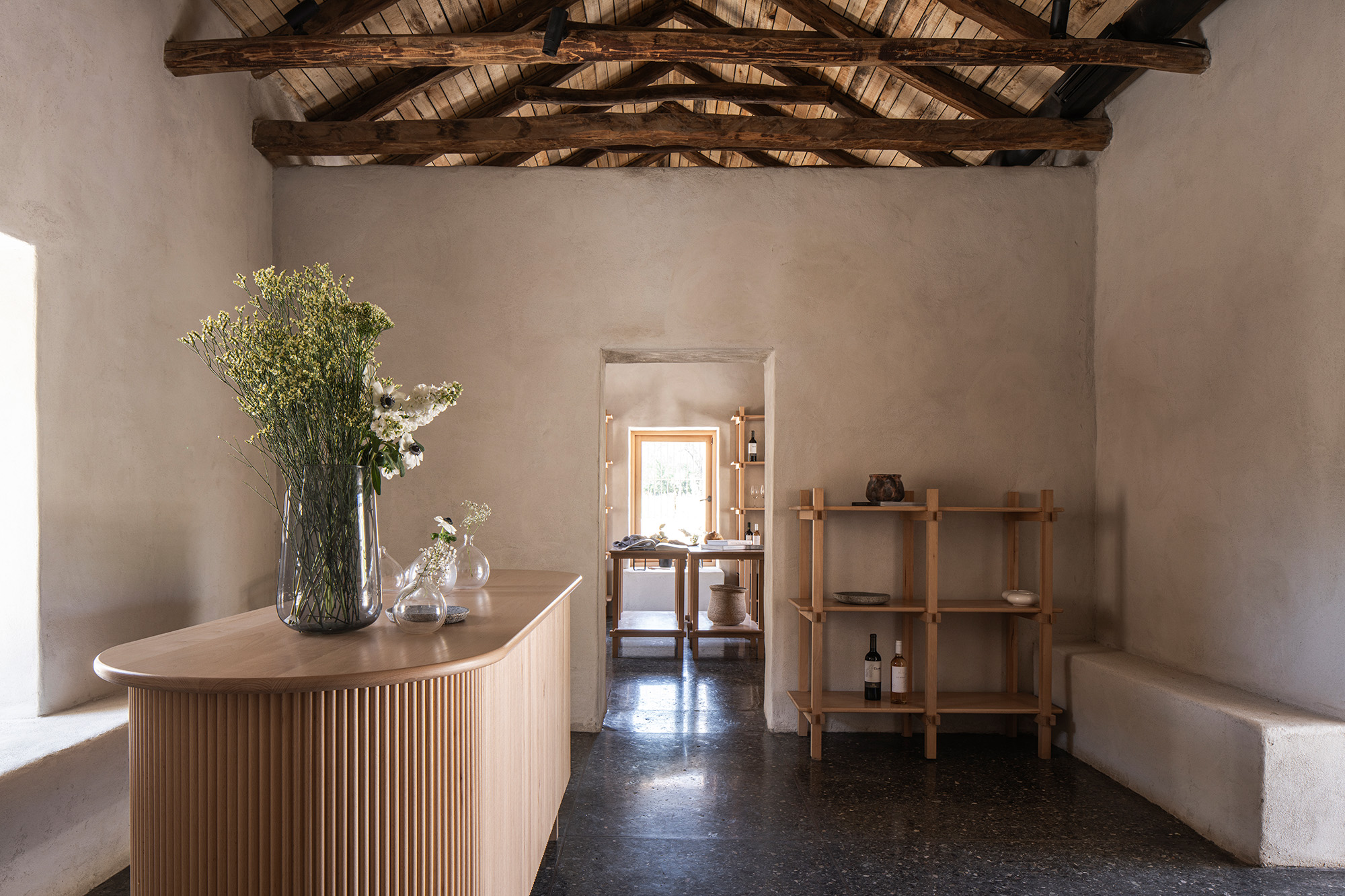
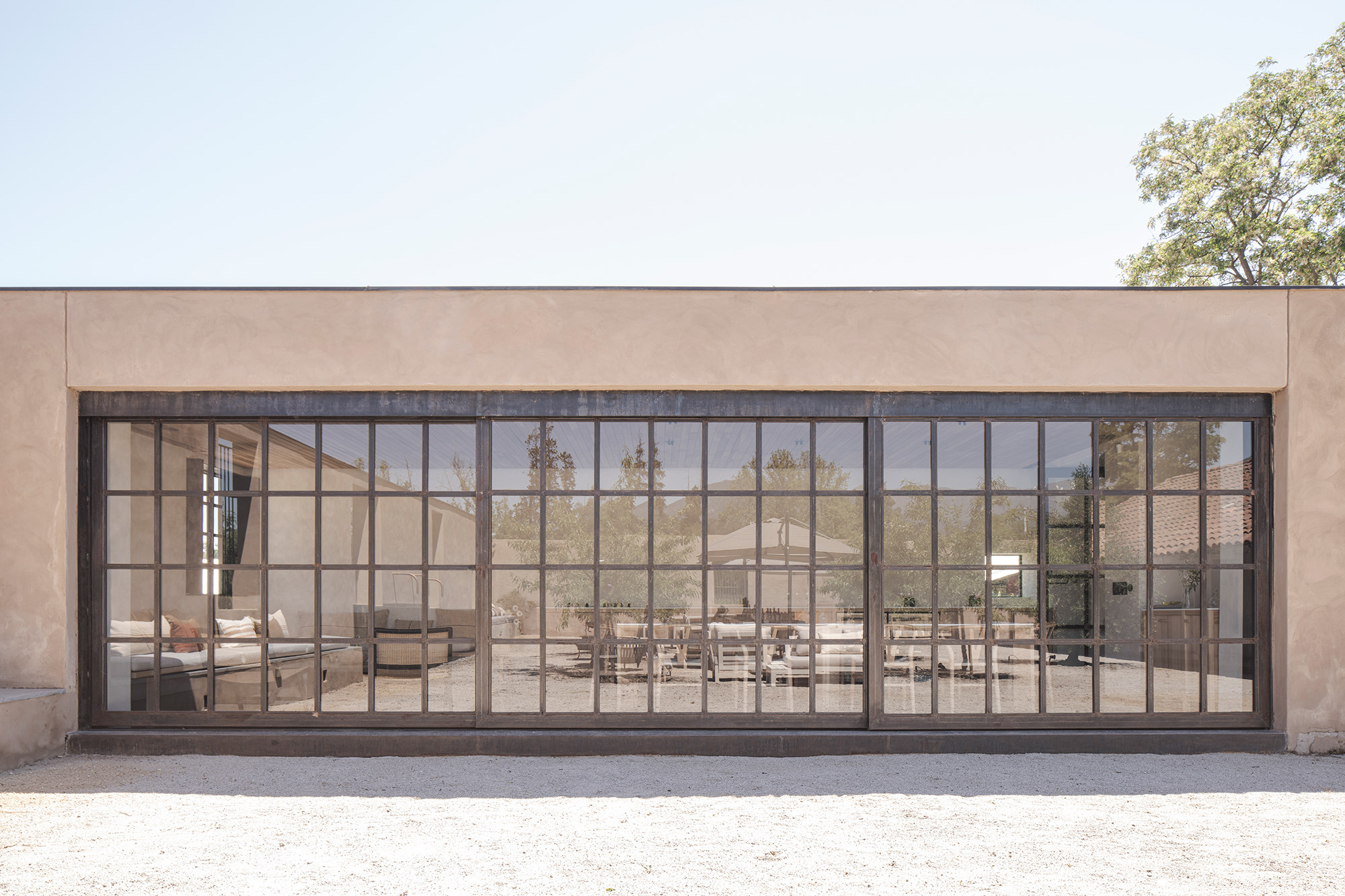
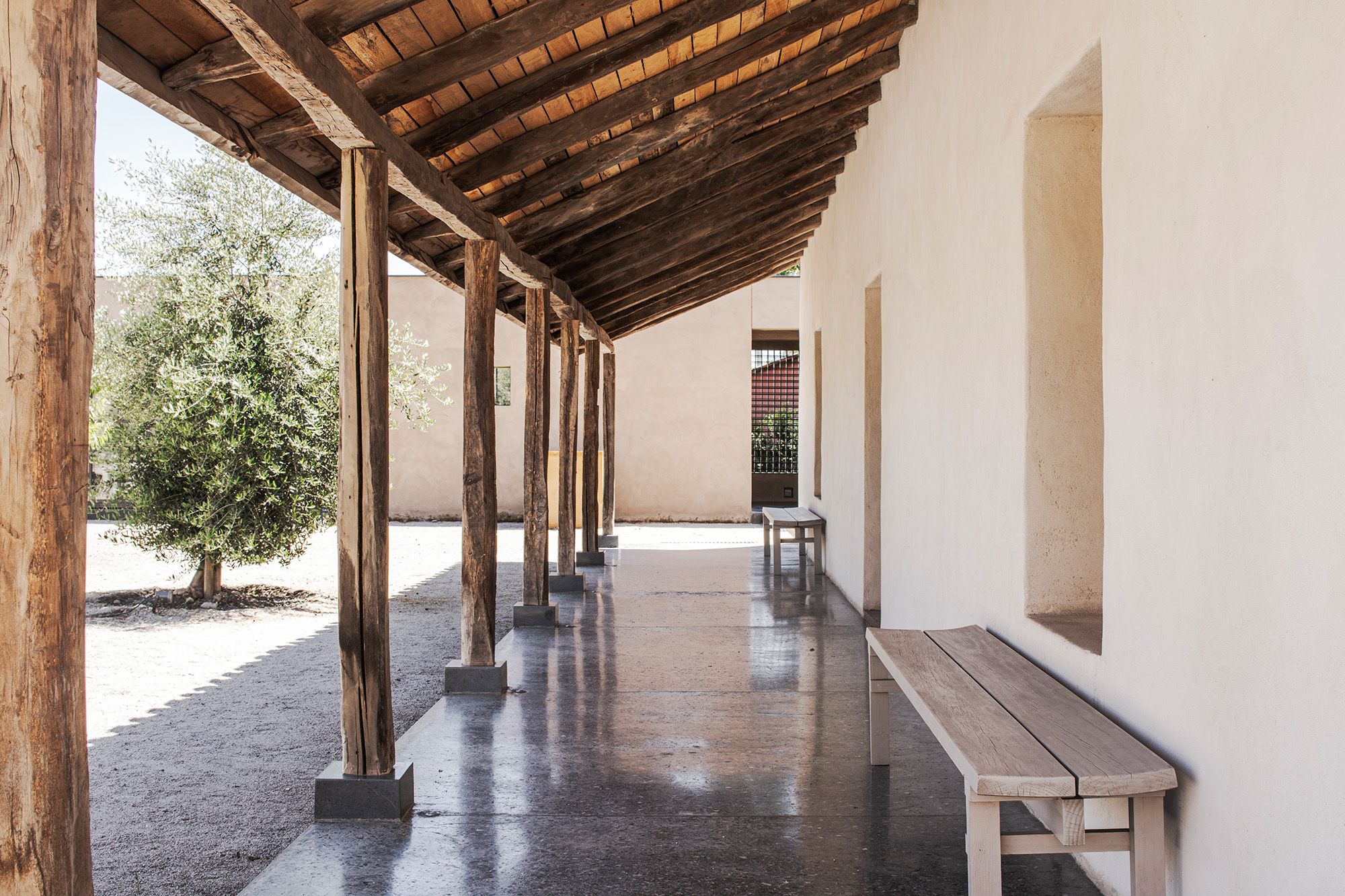
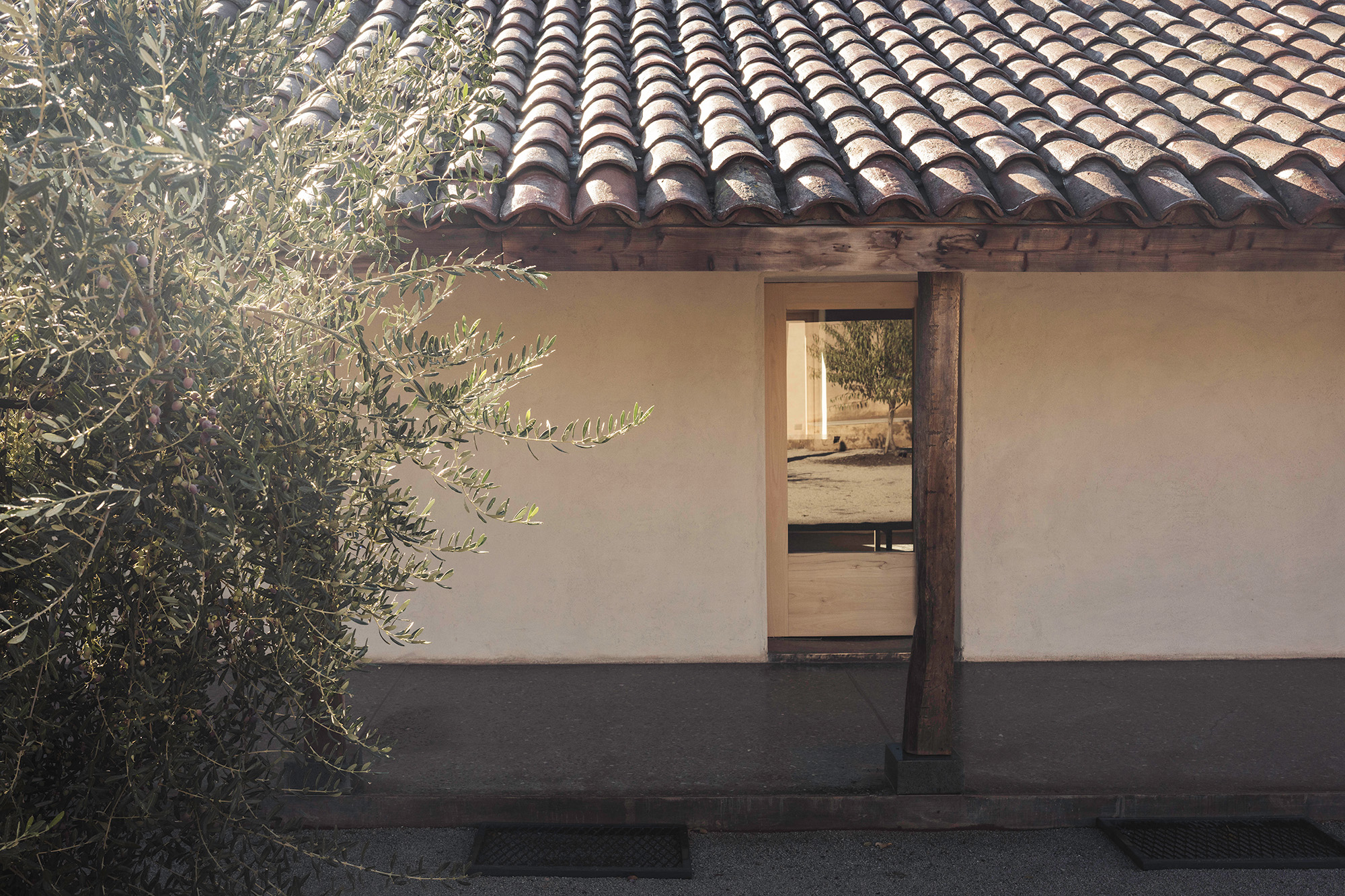
This project considers three main design drivers: integrating the existing adobe tenant house, creating an interiority within this landscape, and transforming the act of purchasing and tasting wine into a memorable and meaningful experience.
THE WINE
Wine is part of culture, not just a product bought off a shelf. The experience of purchasing a wine should not be the same as buying chocolates. In a good wine, there is a millennia-old craft, a territory, a style, and time.
We visit vineyards and cellars to try to see and understand the mystery behind its production. However, the experience of purchasing wine is often more like buying any other product. Therefore, it is crucial to create the right conditions for continuity in care and character between production and purchase.
PRE-EXISTENCE
The existing tenant house — dimly lit, with 60 cm thick walls, lime-washed interiors, and heavy handcrafted tile roofs — is, much like a good wine, an object in the middle of the countryside that contains (and has also withstood) time, culture, and landscape. As the countryside modernizes, these constructions become increasingly valuable and carry a specific and symbolic weight that new buildings cannot achieve.
It is essential to work with the potential of this house and turn it into the wine display space. This is not a romantic idea, but rather about intensifying the relationship between the territory, time, and the bottle of wine. Furthermore, the lime-washed, dimly lit interior, illuminated by small windows, distances itself from commercial architecture and draws closer to the architecture of certain convents, making it suitable for conversion into a wine cellar.
SECURITY AND INTERIORITY
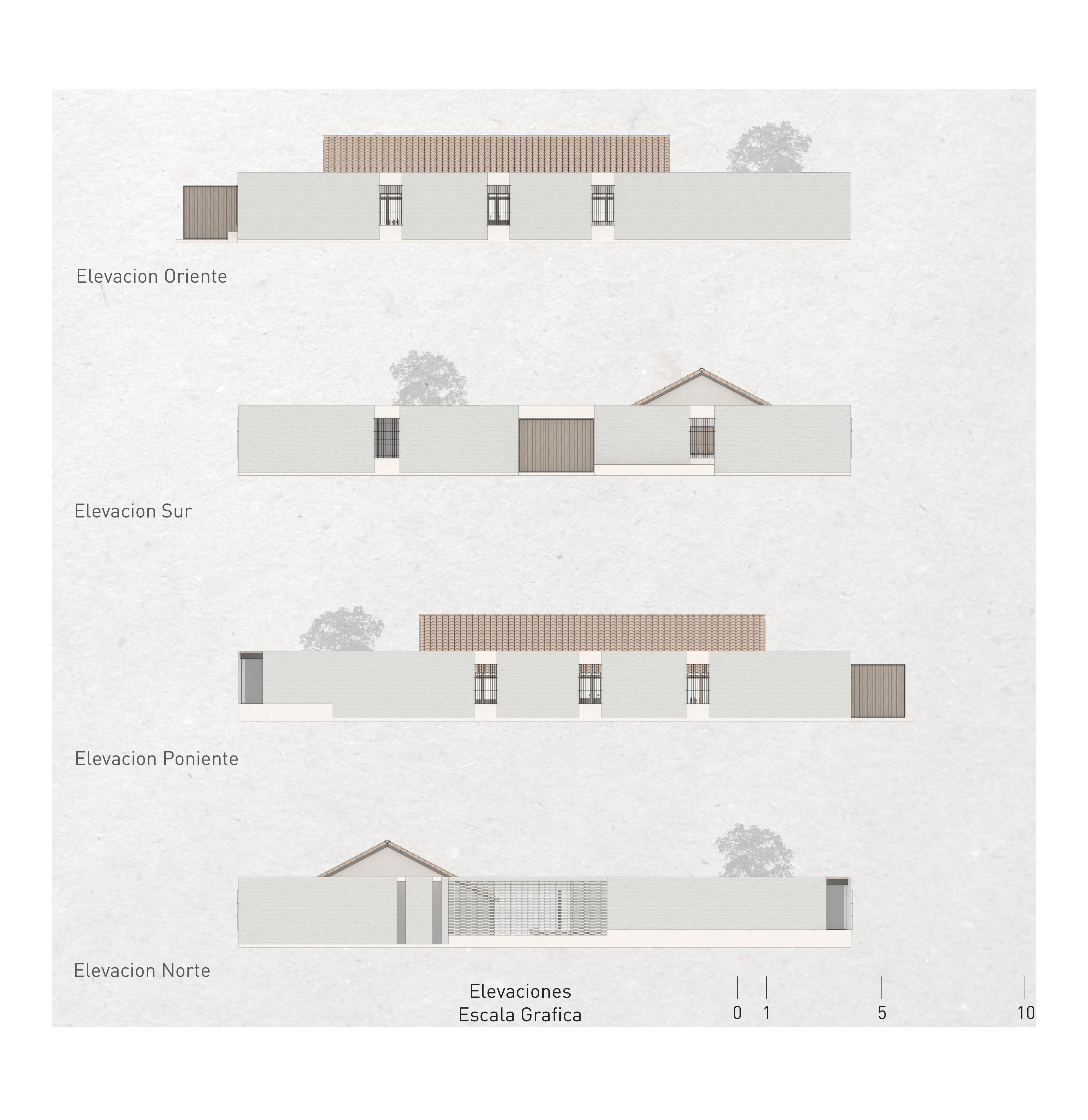
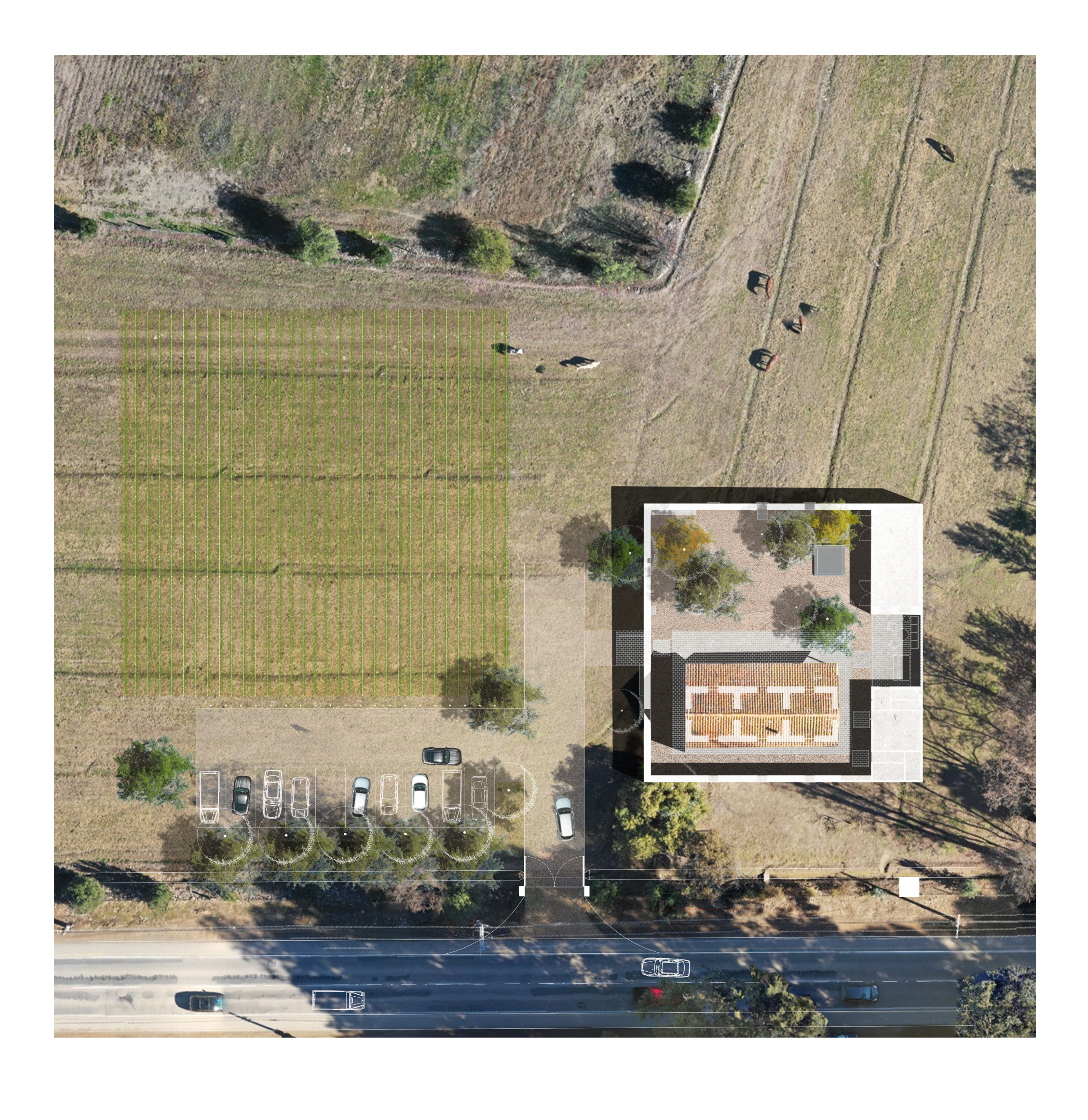
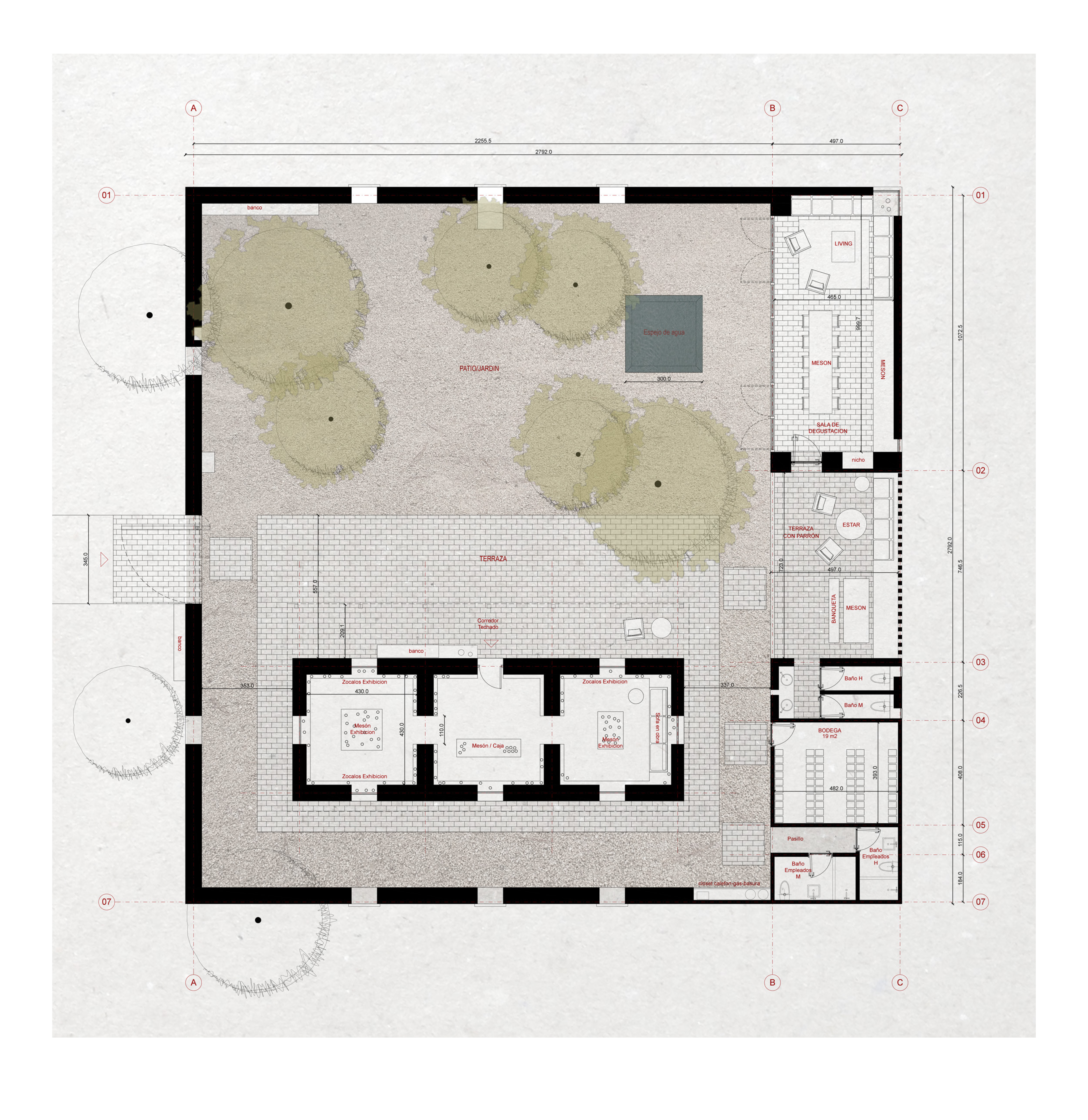
In addition to sobriety and elegance (i.e., choosing wisely), security is a fundamental quality of the traditional adobe architecture of the central valley, which creates hermetic buildings with few windows, but also provides the protected and open interiority of courtyards and corridors. Following this tradition, the project establishes a 28 x 28 m perimeter wall around the existing house, allowing for the creation of an interior courtyard and also containing complementary programs to the store: the cellar, bathrooms, and tasting room.
LIFESTYLE
As mentioned, the project forms a walled perimeter, like a clos, aimed at creating an interiority that neither the existing house nor the open countryside provide. This interiority allows, on one hand, separation from the immediate context and an opening to distant views, and on the other, it articulates generous exterior spaces with varying degrees of shade thanks to the eaves, trees, and walls. The goal is to create a memorable experience for the visitor: crossing the entrance threshold against the light, hearing the wooden gate creak, walking on brick and stone pavements marked by the shadows cast by trees, hearing the sound of water in the courtyard and the echo of the walls, walking under the strict shadow of the corridor, passing through the thick adobe walls, feeling the coolness of the house’s interior, adapting the eyes to the dim light, and clearly seeing the different bottles displayed along the perimeter, some against the windows that let the wine inside shine through. The whole experience is not simply a box where wines are piled up, but a house that contains a terroir.
Emperio Liguai
Combeau Murtagh
Location
Huelquén, Chile.
Gross Bulding Area 150 m2
Architecture Competition 2019
Construction 2021
Design Team:
Felipe Combeau + Andrea Murtagh
Juan Francisco Guzman
Structure Engineer:
Mario Pinto
Contractor:
IMPG, Juan José Gutierrez
Photos:
Nicolas Saieh, Felipe Combeau